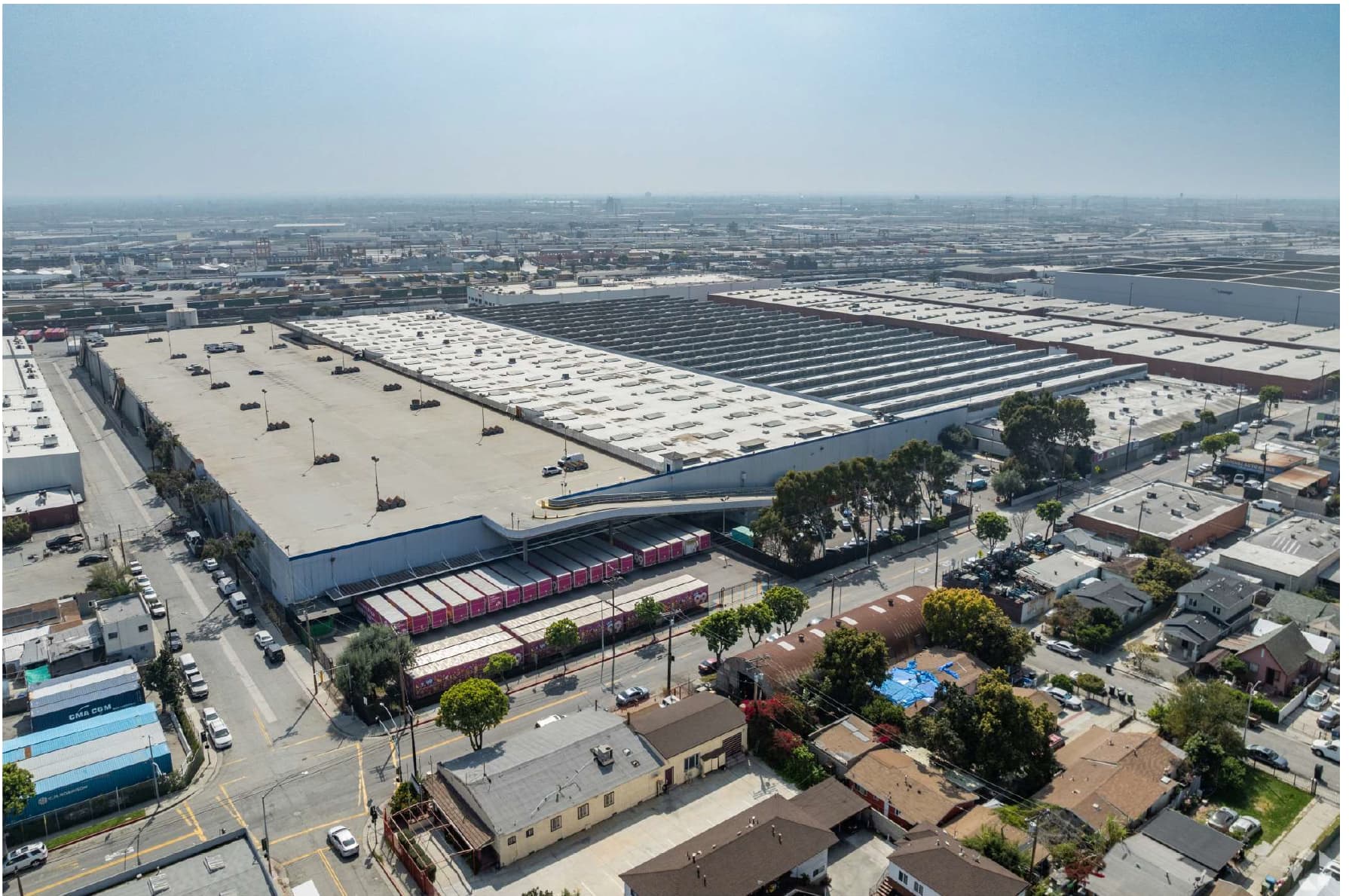
Executive Summary
The industrial real estate sector is undergoing significant transformation. Following pandemic-driven demand swings, stabilization approaches as the market is showing a shift back to pre-pandemic demand drivers, propelled by e-commerce growth. Challenges persist for aging warehouses competing against modern facilities. Nearly 400 million square feet of industrial space constructed since 2023 remained vacant by the third quarter of 2024.
Current Market Conditions for Old and New Warehouse Spaces
The Rise of Modern Facilities
Modern facilities have captured market attention with positive net leasing absorption. Post-2000 buildings significantly outperform older counterparts, with over 200 million square feet of positive absorption, while facilities built before 2000 saw 100 million square feet of negative absorption last year.
Reports indicate 135 million square feet (msf) net absorption in 2024, a modest yet steady recovery. Vacancy rates climbed to 6.7%, reflecting heavy reliance on newly-built logistics hubs.
Demand for Quality Fuels Shift Away From Older Spaces
Older distribution centers face mounting challenges. Properties constructed prior to 2000 accounted for over 100 msf of negative absorption in 2024, as tenants prioritize facilities offering high ceilings, energy efficiency, and automation capabilities.
This contrasts with 200 msf of positive absorption posted by post-2022 constructions. Tenants expect warehouses aligned with modern priorities including automated inventory systems and last-mile delivery optimization. E-commerce is projected to grow from 23.2% of total retail sales to 25% by late 2025. Older spaces, often in secondary markets or configured for outdated operations, require capital-intensive retrofits or sales strategies.
Key Market Drivers
Economic Trends
Economic normalization refocuses industrial real estate on classical demand drivers including consumer spending and retail expansion. Rising interest rates and decelerating GDP create uncertainty. Despite headwinds, industrial leasing remains strong, with 800 million square feet of deals projected in 2025.
Onshoring and nearshoring to North America counterbalance offshoring. With record-low industrial vacancy rates in Mexico, U.S. distribution sites located close to border regions or along key highways like Interstates 29 and 35 are increasingly critical.
Supply Chain Demands and the Role of E-Commerce
E-commerce accounts for 23.2% of U.S. total retail sales in Q3 2024, projected to reach 25% by the end of 2025. This amplifies demand for sophisticated warehouses equipped with fulfillment technology in urban-adjacent areas.
Third-party logistics providers (3PLs) play an outsized role. With 3PLs expected to represent 35% of industrial leasing activity in the coming year, their growth points to a broader shift toward outsourced operational efficiency.
Technological Advancements
Technology enables occupiers to optimize warehouse efficiency. Features like autonomous robotics, smart inventory systems, and energy-efficient building systems are no longer optional. They're becoming necessities for tenants. Facilities unable to meet technological thresholds risk obsolescence.
Regional Dynamics and Investment Highlights
Vacancy Rates
Vacancy rates increased by 20 basis points (bps) in Q4 2024 alone, reaching 6.7%, though growth pace is slowing. Big-box facilities (over 300,000 sq ft.), which accounted for 51% of new speculative deliveries, face a 10.7% vacancy rate.
Markets impacted by speculative projects report high vacancy: Austin (13.3%), Phoenix (12.7%), and Greenville, SC (11.6%). More stable core hubs include the Inland Empire (8.0%) and Dallas/Ft. Worth (9.7%).
Construction Trends
Developers added 425 msf of new industrial supply in 2024, with 85.3 msf in Q4 alone. This marks the lowest delivery volume since mid-2021, indicating reduced speculative activity. Over 78% of 2024 completions consisted of speculative builds, explaining heightened vacancy pressure. Smaller projects of 100,000–300,000 sq ft. dominate pipelines, representing 60%+ of construction underway.
Net Absorption & Leasing Activity
Net absorption totaled 36.8 msf in Q4 2024, reflecting a 10.5% quarter-over-quarter increase. Overall demand stabilized with 800 msf projected for 2025, with 3PL firms continuing to hold a 35% market share of new leasing activities.
Strategic Recommendations for Stakeholders
Regional Variances & Emerging Hubs
Core Markets Steady Leasing: Regions like Atlanta, Dallas/Ft. Worth, Inland Empire, and New Jersey remain indispensable for industrial occupiers due to their access to consumer pools, established trade nodes, and robust supply chain networks. Dallas/Ft. Worth achieved 3.3+ msf Q4 absorption, ensuring its position as a leasing leader.
Rising Opportunities in Emerging Nodes: Secondary hubs position themselves as alternatives to oversaturated areas. Louisville (+38% pipeline growth YOY) serves manufacturers while Phoenix (42.9 msf delivered) caters to West Coast port spillover. Proximity to U.S.-Mexico corridors is accelerating demand in San Antonio, Austin, and Kansas City.
Onshoring Commands Cross-Border Trade: With looming tariffs on Asian imports and reshoring driving capacity increases for electronics and automobiles, emerging southwestern hubs along Interstates 29/35 are capturing industrial traffic at record growth levels.
For Developers
-
Focus on High-Quality Construction: Capitalize on the flight to quality by emphasizing developments with advanced logistics systems, sustainability certifications, and scalability.
-
Adapt Older Spaces for Niche Markets: Reposition outdated properties by targeting smaller manufacturers or own-occupy buyers valuing cost savings.
-
Leverage Emerging Market Potential: Explore secondary cities where industrial land remains affordable and long-term growth is supported by e-commerce growth and trade activity.
For Investors
-
Prioritize Core Market Assets: Assets in major industrial hubs will remain resilient, providing predictable returns bolstered by robust tenant demand.
-
Identify Value-Add Redevelopment Opportunities: Acquire and modernize older facilities, tailoring them to underserved niches like cold storage or local distribution networks.
-
Bet Long-Term on Nearshoring: Markets linked to U.S.-Mexico trade will see consistent value appreciation through analyzing infrastructure projects.
For Occupiers
-
Secure Space Early: The balanced demand-supply equation is shifting. Locking in favorable lease terms now will hedge against steep cost increases in coming years.
-
Invest in Automation-Friendly Locations: Seek spaces with high ceilings, flat floors, and electrical capacity for robotics ensuring operational scalability.
-
Utilize 3PL Services: Partnering with 3PLs reduces upfront capital risks while providing flexibility in uncertain environments.
Concluding Thoughts
The industrial market is being reshaped by technology, supply chain demands, and the lasting impact of e-commerce. Aging distribution centers face the most pressure, as tenants increasingly want modern facilities.
Yet opportunities exist. Developers and investors who align with current demand signals, whether through retrofitting legacy spaces, building sustainable facilities, or investing in forward-looking locations, are poised to lead the next wave of growth.
E-commerce growth, reshoring efforts, and net-zero operation goals will reshape practices. Those proactively adapting rather than merely reacting will unlock advantages. Decision-makers must prioritize innovative solutions and align their strategies to meet both tenant demands and sustainability goals. The success of tomorrow begins with the decisions you make today.
Frequently Asked Questions
- What is the current vacancy rate for U.S. industrial real estate?
- Vacancy reached 6.7% by Q4 2024, up 20 basis points in that quarter alone. Big-box facilities over 300,000 SF face a higher rate of 10.7%. Markets with heavy speculative construction such as Austin (13.3%) and Phoenix (12.7%) are above average, while core hubs like the Inland Empire (8.0%) remain more stable.
- Why are older warehouse properties losing tenants?
- Tenants are prioritizing modern facilities with high ceilings, energy efficiency, and automation capabilities. Properties built before 2000 recorded over 100 million square feet of negative absorption in 2024 as occupiers moved to post-2022 buildings that support automated inventory systems and last-mile delivery optimization.
- Which industrial markets are best positioned for long-term growth?
- Core markets with established supply chain networks, including Atlanta, Dallas/Ft. Worth, the Inland Empire, and New Jersey, remain the most reliable for steady leasing. Secondary markets along U.S.-Mexico trade corridors (San Antonio, Kansas City) and emerging hubs like Louisville are drawing interest from manufacturers and logistics operators as nearshoring activity increases.
- What should industrial investors focus on in 2025?
- Prioritize assets in core markets with strong tenant demand, and look for value-add opportunities in older facilities that can be repositioned for cold storage or local distribution. For new development, high-quality construction with advanced logistics systems and sustainability certifications has the best leasing outlook. Markets linked to U.S.-Mexico trade corridors offer long-term upside from nearshoring.