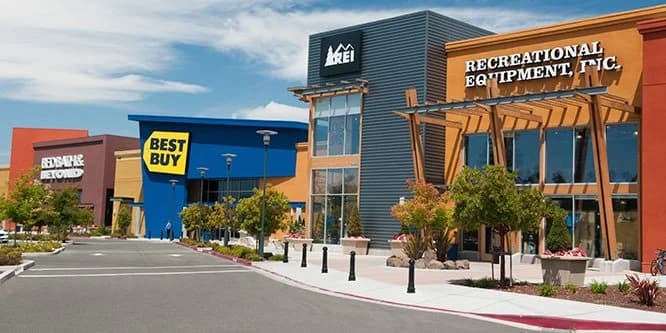
Strip shopping centers, typically open-air retail centers under 40,000 SF, have shown resilience in recent years across Western U.S. markets. Strong consumer demand for convenient, in-person shopping and dining has kept vacancies low and supported rent growth, even as e-commerce and rising interest rates pose challenges. This report analyzes current market trends, risk factors, cap rate trends, tenant mix, financing options, and provides a comparative overview of key Western markets (Las Vegas, Phoenix, Denver, Southern California). We also include case studies of recent strip center transactions (around 24,000 SF) to illustrate real-world investment metrics. All data and insights are recent (2023–2024) and geared toward equity investors preparing an investment deck.
Market Trends Influencing Strip Center Investments
Robust Demand and Low Vacancies
Retail vacancy rates in many Western markets are at or near historic lows due to strong tenant demand and limited new construction. For example:
- Las Vegas: Retail vacancy was ~5.1–5.7% in mid-2024, a 15-year low
- Phoenix: Hit record-low availability of ~4.6% in early 2024 amid surging demand
- Denver: Vacancy fell to ~3.9% by late 2023, reflecting exceptionally tight conditions
- Southern California: Vacancy hovers in the mid-single digits (e.g. ~4% in Orange County, ~6% in the Inland Empire)
Tenant rep brokers report difficulty finding quality space for clients in such a supply-constrained environment.
Shifting Retailer Strategies
Tenant mix is evolving to emphasize experiential and necessity retail. Food and beverage, discount/off-price retailers, and entertainment uses are leading absorption. In Las Vegas, fast food/QSR outlets now generate the highest foot traffic (14 million monthly visits as of mid-2024), indicating consumer preference for dining and quick-service convenience. National chains in fitness (gyms), grocery, and experiential concepts (e.g. indoor recreation like pickleball) are expanding to fill larger vacancies. Meanwhile, smaller storefronts are being leased by service-oriented tenants (salons, clinics, financial services) and popular fast-casual restaurants.
Limited New Supply & Redevelopment
New retail construction in these markets is modest, focused mostly on pre-leased build-to-suits or anchored centers. In Denver, only ~6% of the retail pipeline is speculative; most projects are build-to-suit for specific tenants. High construction costs and developers' caution have kept new supply low. In Phoenix, only ~1.1 million SF delivered in the past year (a fraction of demand), and older retail sites are sometimes redeveloped into other uses (e.g. multifamily) in dense areas. In Southern California, there is a trend of repurposing obsolete retail (especially old big-box or mall spaces) for higher uses like apartments.
Investor Interest Shifting to Retail
Given these solid fundamentals, retail strip centers are drawing increased interest from investors, including those from other sectors. Market observers note more multifamily-focused investors now targeting retail centers because retail cap rates (yields) are higher than multifamily cap rates in many markets. For instance, in San Diego, retail cap rates are several basis points higher than apartment yields, prompting multifamily investors to pursue retail acquisitions. Private buyers, 1031 exchange investors, and newly formed retail REITs are actively seeking well-located strip centers that offer stable cash flow and potential upside.
Consumer Spending Patterns
Shoppers have become more value-conscious, benefiting discount retailers and forcing restaurants to adapt. Essential retail (grocery, convenience stores, pharmacies) and "affordable luxury" retailers have generally performed well, keeping strip center occupancy strong. Markets like Las Vegas also enjoy a boost from population and tourism growth. The Vegas region is a "top market" for retail thanks to a fast-growing population and millions of visitors, driving up retail sales and tenant expansion.
Risk Factors and Mitigations
Investing in strip centers comes with certain risks, but proactive strategies can mitigate them:
-
E-Commerce and Changing Retail Behavior: Focus on leasing to internet-resistant tenants: restaurants, service providers (salons, clinics, gyms), grocers, dollar stores, and experiential retailers that require physical presence. Having a diverse tenant mix heavy in "daily needs" and service-oriented users insulates a strip center from online competition.
-
Tenant Credit and Turnover: Diligent tenant credit underwriting and spreading risk across a balanced mix of national credit tenants and local favorites. Securing at least one anchor or mini-anchor with a strong covenant provides income stability. Use personal guarantees or letters of credit for local mom-and-pop tenants when possible, and maintain a reserve for re-leasing costs.
-
Economic and Demographic Cycles: Select locations with favorable demographics (growing population, solid incomes) and visibility. Essential-needs anchors help ensure traffic even during downturns. In volatile economies, underwrite with conservative occupancy and rent growth assumptions.
-
Competitive Supply & Overbuilding: Target locations with high barriers to entry: infill neighborhoods or fully built trade areas where new competition is less likely. Alternatively, invest in centers with unique draws (exclusive anchor tenants or specialty offerings) that differentiate them from generic strip malls.
-
Interest Rate and Refinancing Risk: Use prudent leverage and consider locking in fixed-rate debt to hedge against rate volatility. Ensure initial debt service coverage is healthy (most lenders now want DSCR ≥ 1.30x or better). Underwriting should also account for an exit cap rate higher than entry, as a cushion.
-
Management and Operational Challenges: Invest in property upkeep, security, and community engagement. Strategies include regular security patrols, good lighting, and working with local authorities. A well-maintained center retains tenants and keeps customers coming.
Cap Rate Trends and Expected Returns
Cap Rate Expansion
Cap rates for strip centers in the Western U.S. have generally risen over the past 18–24 months, mainly due to the jump in interest rates. After hitting historic lows in 2021–2022, retail cap rates expanded in 2023 by roughly 50–100 basis points. In Las Vegas, average retail cap rates rose by over 0.5% through 2023. Sales data show Vegas retail deals averaging a ~5.7% cap in early 2023, increasing to about 6.2% by late 2024. In the Inland Empire (SoCal), cap rates climbed from ~5.2% in 2022 to the 6% range in 2024, over 100 bps increase.
Current Cap Rate Levels
As of late 2023/early 2024, typical multi-tenant strip center cap rates are in the mid-5% to mid-6% range, varying by market and asset quality:
- Phoenix: Retail centers averaged around 6.0% cap in Q1 2024
- Denver: Retail sales in 2023 similarly averaged a ~5.8% cap rate
- Las Vegas: Good neighborhood centers trading around the mid-5% to low-6% range
- Prime coastal California: Often high-4% to 5% for well-located, credit-anchored centers
- Secondary/tertiary submarkets: Caps in the high-6% to even 7% range for smaller or higher-risk strips
Expected Returns
Equity investors in strip centers typically target an attractive spread above debt and risk-free rates. With 10-year Treasuries around ~4–5% in late 2023, and lending rates ~6–7%, investors are seeking going-in cap rates that can deliver cash-on-cash yields in the high single digits after leverage. A 6% unlevered cap can translate to ~9–10% cash yield at 60% LTV financing. Many investors underwrite an IRR in the low-to-mid teens on a 5+ year hold, factoring in some NOI growth and a conservative exit cap.
Phoenix saw asking rents surge ~8.4% year-over-year in 2023, and Las Vegas posted ~3–4% annual rent growth recently, which can boost returns. Overall, an equity investor can expect mid-single-digit to low-double-digit annual returns from a stabilized strip center investment, with upside if they can drive rent growth, lease up any vacancy, or improve the tenant mix over time.
Typical Tenant Mix and Leasing Dynamics
Tenant Mix
Strip centers under 40,000 SF are usually anchored by one or two key tenants (if any) and a mix of smaller inline tenants. Common anchor/major tenants for centers in this size range include:
-
Neighborhood Grocers or Markets: Ethnic grocery stores, specialty organic markets, or convenience marts can serve as strong traffic drivers for centers in this size range.
-
Discount and Daily Needs Retailers: Dollar stores (Dollar Tree), drugstores, or beverage markets. These draw frequent visits and tend to be e-commerce resistant.
-
Food and Beverage: Quick-service restaurants and cafes are staple tenants: sandwich shops, pizza takeout, ice cream, coffee (e.g. Starbucks or local cafes), fast-casual eateries. Drive-thru pads have been in extremely high demand and command premium pricing.
-
Personal Services and Medical: Nail salons, hair salons/barbers, massage or spa services, and dry cleaners. "Medtail" tenants (medical offices in retail space like urgent care, dental clinics, physical therapy) have expanded, providing stable, needs-based uses. Fitness studios or small gyms (yoga, pilates, martial arts) increase daily foot traffic.
-
Specialty and Others: Pet supply stores or pet grooming, learning centers/tutoring, cell phone retailers, bank branches, and insurance or real estate offices.
A healthy strip center tenant mix is balanced between national/regional brands and local businesses. National brands offer credit stability and draw, while local tenants can provide unique services and often pay market rents for good locations.
Leasing Dynamics
Leasing in strip centers is almost always done on NNN leases, where tenants pay base rent plus their share of operating expenses (property taxes, insurance, CAM). Typical lease terms: smaller inline tenants often sign 3–5 year initial leases (sometimes up to 10 for established businesses), usually with options to renew. Major tenants or anchors sign longer leases, often 10 years plus options.
Annual rent escalations around 2–3% per year (or 10% every 5 years for some national tenant leases) are common. Landlords today have strong negotiating leverage in many markets due to low vacancy. In-demand spaces (like a rare vacancy in a prime center) may lease quickly at increasing rents.
Financing Options and Lender Preferences
Debt Financing Landscape
Financing strip center acquisitions has been challenging but improving as lenders warm up to retail again. The rapid rise in interest rates in 2022–2023 made debt more expensive (current mortgage rates for retail are roughly 6%–7%+ for fixed-rate loans). This reduced the loan amounts lenders would offer and required sponsors to contribute more equity. However, as retail fundamentals exceeded expectations (low defaults, strong NOI growth), lenders are regaining confidence in the sector.
Lender Types and Preferences
-
Life insurance companies: Often the best source of non-recourse loans at attractive rates for stabilized strip centers. Life insurers prefer low-leverage, high-quality deals (e.g. 50–65% LTV on a grocery-anchored or well-tenanted center) and can offer 10+ year fixed terms.
-
Banks (regional and community): Actively lend on smaller retail centers, but typically require a banking relationship. Banks may offer 5–7 year terms with amortizations of 25–30 years, and many will want recourse (personal guarantee) for strip centers.
-
CMBS: The CMBS market can provide higher leverage (up to ~70% LTV) and non-recourse financing, and is expected to pick up for retail in 2024. Borrowers need a clean property and strong stable rent roll.
-
Debt funds and bridge lenders: An option if the center has some vacancy or needs a reposition. They offer short-term, interest-only loans (often floating rate 8–10%+ interest) to allow time for lease-up or renovations.
Underwriting and Terms
Lenders are conservative: DSCR requirements have risen to 1.30–1.40x on in-place NOI, LTV ratios capped around 60–65% for retail unless it's a very strong anchor or credit tenant roster. Lenders heavily favor fully leased centers with solid tenants. Centers anchored by essential retail (grocery, pharmacy) or high-traffic generators are viewed as lower risk.
Comparative Analysis of Western U.S. Markets
All four key markets enjoy strong occupancy and positive rent trajectories, though the pace of growth varies:
-
Phoenix and Las Vegas: Sun Belt markets combine low vacancies with higher rent growth, attractive for investors seeking both yield and upside. More often in the mid-5% to low-6% cap rate range, and some secondary suburban deals in the mid-6% to 7% range.
-
Denver: Steady if unspectacular growth. A middle-ground risk/return profile.
-
Southern California: Coastal assets prized for long-term security, albeit at lower initial yields. Trophy locations may trade in the 5% range or lower.
Investor composition also varies: In Denver and SoCal, private local investors and 1031 exchange buyers dominate recent transactions. In Las Vegas and Phoenix, both local players and out-of-state investors (including new REITs) are actively acquiring strip centers, drawn by the growth narrative and relative value.
Case Studies and Recent Transactions (Under 40,000 SF Strip Centers)
Las Vegas (Henderson), NV – Gibson Center (10,523 SF): A small strip center built in the 2000s, 100% leased to multiple tenants, sold in December 2024 for $3.4 million (about $323/SF). The cap rate was approximately 6.2%. The buyer was a private local investor. Henderson's strong demographics likely supported the pricing.
Surprise (Phoenix), AZ – Shops at Prasada (34,000 SF portion): In an off-market deal (closed January 2025), Curbline Properties REIT acquired 7 acres of a newly developed retail center in suburban Phoenix for $32 million. The purchase included 34,000 SF of shop space leased to Shake Shack, Starbucks, Torchy's Tacos, Einstein Bros Bagels, and Portillo's. The price equates to $941/SF, an exceptionally high per SF valuation implying a low cap rate (likely mid-4% to 5% range). The center was 89% pre-leased as part of a larger development anchored by Target. This highlights the bifurcation in the market: top-tier assets with national tenants in booming suburbs can command cap rates far below the averages.
San Bernardino, CA – Esporta Fitness @ University Towne Center (32,800 SF): In June 2024, a single-tenant building occupied by LA Fitness's "Esporta" brand sold for $9.3 million (~$285/SF). The cap rate was just under 7%, reflecting the tenant had only 5 years left on the primary lease term. This shows how short lease term or re-leasing risk is priced in by investors.
Chino, CA – Shoppes at Rancho Del Chino (15,500 SF): A multi-tenant strip center shadow-anchored by Home Depot sold in April 2024 for $7.4 million (~$479/SF). Despite being fully leased at sale, it was marketed as a value-add because rents were ~25% below market averages. The closing cap rate was 6.2%. This deal illustrates a typical small strip center trade: fully occupied, in a strong retail node, with embedded upside from below-market rents.
Las Vegas, NV – KinderCare @ Buffalo Dr. (12,931 SF): In May 2023, a KinderCare daycare property in Vegas sold for $7.475 million (~$578/SF), likely at a mid-5% cap rate given the high price per SF and the tenant's long-term lease. It shows that essential-service retail commanded strong pricing.
Key takeaways from case studies:
- Cap Rate Variation: Newer, Class A strips with strong tenants can trade at very low caps (4–5% range). Typical neighborhood strips in good locations trade around 6–6.5%. Those with shorter leases or more perceived risk trade higher (~7% or more).
- Pricing per SF: There's a huge range ($300/SF up to $900/SF) depending on rent levels and tenant caliber.
- Value-Add Potential: Investors actively seek embedded upside such as below-market leases or minor vacancies to fill.
- Active Buyer Pool: Buyers are predominantly private investors or specialized retail investors, including new REITs. Private capital is seizing opportunities while many institutional buyers have been net sellers or on the sidelines.
Conclusion
Strip center assets in the Western U.S. present a compelling investment profile in 2024. Market fundamentals are strong. Vacancies are at historic lows across Las Vegas, Phoenix, Denver, and Southern California submarkets, and tenant demand (especially for food, services, and essential retail) is robust. These positive trends, combined with limited new supply, have driven steady rent growth.
Investors should navigate the space with an eye on risk management: favor tenant mixes resilient to e-commerce and economic swings, underwrite conservatively to account for higher financing costs, and be mindful of lease rollover exposure. The current cap rate environment (mostly 5.5%–6.5% for neighborhood strips) offers a much better entry yield than other property types, but also indicates the need for thoughtful business plans to achieve target returns.
Financing for retail is available and expected to become more accessible as lenders recognize the sector's outperformance. By studying recent transactions, investors can calibrate expectations: whether pursuing a stable 6% yield or a value-add play to drive returns into the teens, the Western U.S. strip center landscape offers opportunities tailored to different strategies. With prudent acquisition criteria and active asset management, strip centers can deliver reliable cash flow and upside in a diversifying portfolio.
Frequently Asked Questions
- What cap rates are strip centers trading at in the Western U.S.?
- As of late 2023 and early 2024, typical multi-tenant strip centers in the Western U.S. trade in the mid-5% to mid-6% range. Phoenix averaged around 6.0% in Q1 2024, Denver around 5.8%, and prime coastal California centers can trade in the high-4% to 5% range. Secondary or higher-risk strips can reach the high-6% to 7% range.
- What types of tenants make a strip center most resilient?
- Tenants in food and beverage, personal services (salons, clinics, gyms), grocery, and discount retail are considered most resilient because their businesses require physical presence and are difficult to replicate online. Drive-thru pads have been in high demand and command premium pricing. A balanced mix of national credit tenants and local businesses provides both income stability and community draw.
- How do lenders underwrite strip center acquisitions?
- Lenders currently require DSCR of 1.30-1.40x on in-place NOI and cap LTV around 60-65% for most retail. Life insurance companies prefer stabilized, low-leverage deals at 50-65% LTV. CMBS can go to 70% LTV with non-recourse terms. Centers anchored by essential retail (grocery, pharmacy) are viewed as lower risk and receive the most favorable terms.
- What is a value-add strip center investment?
- A value-add strip center is one where rents are below market, occupancy has room to improve, or the tenant mix can be upgraded. The Shoppes at Rancho Del Chino case study in this report illustrates the pattern: the center was fully leased at sale but rents were approximately 25% below market averages, giving the buyer embedded upside.