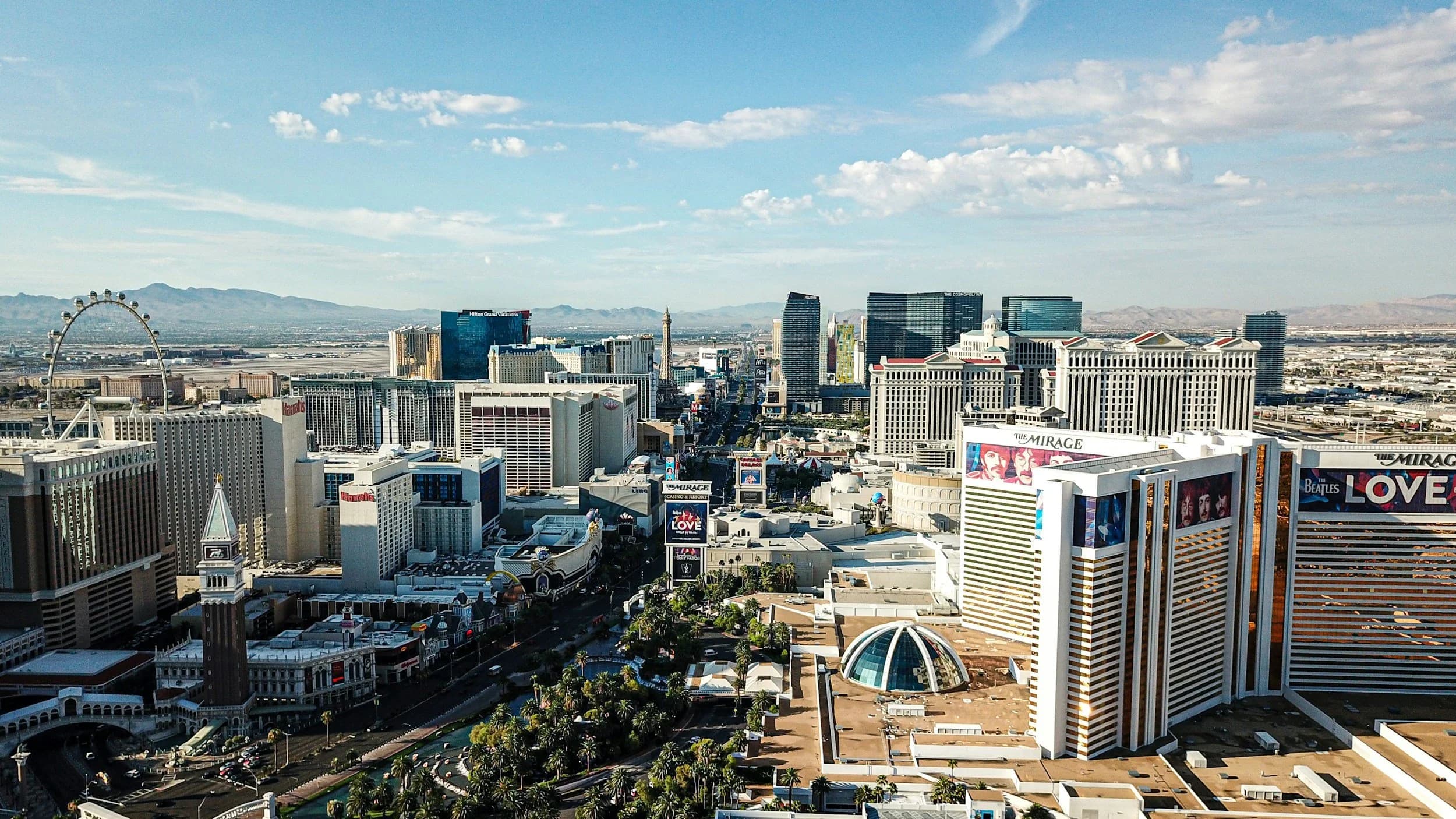
The Southern Nevada retail landscape concluded 2025 in a state of structural maturity. While the aggressive rent spikes seen in 2022–2023 have normalized, the market remains characterized by historic scarcity in prime submarkets and a widening "flight-to-quality" performance gap between asset classes. The Q4 data reveals a resilient consumer base and a development pipeline that is increasingly focused on experiential and mixed-use environments.
Market At-A-Glance: Q4 2025 Key Performance Indicators
| Submarket | Vacancy Rate (%) | Avg. Rent (NNN/Mo) |
|---|---|---|
| Southwest | 2.2% | $2.33 |
| Northwest | 2.4% | $2.09 |
| West (Summerlin) | 3.8% | $2.05 |
| Central West | 3.9% | $1.89 |
| North Las Vegas | 4.3% | $2.02 |
| Southeast (Henderson) | 4.5% | $2.05 |
| Central East | 10.3% | $2.04 |
Data reflects Q4 2025 performance estimates based on reported submarket dynamics. Market-wide annual asking rents averaged between $34.25 and $34.93 PSF.
Core Market Dynamics & Trends
1. The Flight-to-Quality Strategy
Retail demand in Las Vegas is currently bifurcated. Tenants are increasingly migrating toward modern, highly-amenitized Class A environments, even at significant rent premiums. This "flight-to-quality" has kept vacancy in the most desirable submarkets, such as the Southwest (2.2%) and Northwest (2.4%), at effectively zero for modern contiguous space.
2. Supply-Side Scarcity
New supply remains constrained by high construction costs and limited land availability. While nearly 985,000 SF of retail space is currently under development, the pipeline is dominated by mixed-use and experiential projects like The Bend, UnCommons, and the AREA15 Zone 2 expansion. This limited new inventory ensures that landlords in well-located open-air centers retain significant pricing power.
3. Economic Tailwinds
The retail sector is supported by a robust regional economy. The median household income in Las Vegas reached $81,300 in Q4 2025, marking a 3.3% climb year-over-year. Despite a slowing tourism industry that has seen visitor volume dip, gaming revenue and convention attendance have shown resilience, providing a stable foundation for the Resort Corridor.
Asset Class Performance Deep Dive
-
Class A (Lifestyle & Mixed-Use): These centers remain the market's top performers, with rents for lifestyle centers reaching as high as $3.76 PSF per month. Owners are actively managing tenancy to replace underperforming brands with high-demand experiential or "phygital" retailers.
-
Class B (Grocery-Anchored): Neighborhood and community centers continue to draw consistent foot traffic through necessity-driven retail. This segment posted the strongest performance in the second half of 2025, with discount retailers and grocery chains actively backfilling recently vacated big-box spaces.
-
Class C (Unanchored & Older Strip): Older commodity inventory faces increasing pressure. While unanchored strip centers can command high occupancy in high-traffic corridors, those in secondary or tertiary locations are seeing rising vacancy as tenants migrate toward upgraded environments with better visibility and modern buildouts.
Submarket Winners & Outlook
-
The Southwest & Summerlin: Continue to anchor market growth with significant rent premiums and the lowest vacancy rates metrowide.
-
North Las Vegas: Outperforming the metro average with a vacancy rate of 4.3%, buoyed by recent population growth and household formation.
-
Resort Corridor: Registered a vacancy increase of 140 basis points (reaching 5.2%) as the market rebalances following the delivery of landmark projects like BLVD.
Forecast for 2026: We expect net absorption to stabilize as expansion by grocery, value-oriented, and service retailers offsets restraint among discretionary brands. Rent growth is projected to continue at a modest pace of 1.7% – 2.0% in well-located open-air centers.
Download the Full Report
For the complete analysis, including detailed lease and sales comparables, submarket heat maps, and localized construction cost benchmarking, access the full 45-page PDF.
Analyst Note: This summary is based on integrated market data from Avison Young, Cushman & Wakefield, and Lee & Associates as of Year-End 2025.
Frequently Asked Questions
- What were the vacancy rates across Las Vegas retail submarkets in Q4 2025?
- Vacancy ranged from 2.2% in the Southwest to 10.3% in Central East. The Northwest posted 2.4%, West Summerlin 3.8%, Central West 3.9%, North Las Vegas 4.3%, and Southeast Henderson 4.5%.
- Which Las Vegas retail submarkets performed best in Q4 2025?
- The Southwest and Northwest submarkets had the lowest vacancy rates metrowide at 2.2% and 2.4% respectively, effectively zero available modern contiguous space. North Las Vegas outperformed the metro average, buoyed by recent population growth and household formation.
- What is driving the flight-to-quality trend in Las Vegas retail?
- Tenants are migrating toward modern, amenitized Class A environments even at significant rent premiums. Lifestyle center rents reached as high as $3.76 PSF per month, while older Class C strip centers in secondary locations face rising vacancy as tenants pursue better visibility and modern buildouts.
- What is the outlook for Las Vegas retail rents in 2026?
- Rent growth is projected at a modest 1.7% to 2.0% in well-located open-air centers. Net absorption is expected to stabilize as grocery, value-oriented, and service retailers offset restraint from discretionary brands.