For three years the insurance line was the quiet deal killer in our underwriting. That has changed at the top of the market: property catastrophe reinsurance rates fell about 14.7% at the January 1, 2026 renewal and another 15% to 20% at June 1, the sharpest decline since 2014. But the discount does not fall evenly to the property. Whether it reaches your renewal depends on where the asset sits, how well the risk is documented, and whether you actually shop the policy. In low-catastrophe markets like the Las Vegas valley, the insurance line is turning from a headwind into a modest tailwind. In wildfire and hail zones, it is barely moving.
What actually happened at the top of the tower
Reinsurance is the insurance that insurance companies buy, and its price sets the floor under what property owners eventually pay. That floor just dropped hard. Howden Re reported that risk-adjusted global property catastrophe reinsurance rates fell 14.7% at the January 1, 2026 renewal, accelerating from an 8% decline in 2025 and marking the largest year-on-year cut since 2014. Business Insurance and other trade reporting put the June 1 midyear renewals down another 15% to 20% against the prior year.
The cause is capital, not calm weather. Insurance Journal reported dedicated reinsurance capital at a record level near $785 billion, up roughly 9% year over year, as strong reinsurer profits and heavy insurance-linked securities issuance pulled money into the space. First-half 2026 catastrophe losses ran around $38 billion, below the ten-year average, so reinsurers entered the back half of the year with room to keep deploying. David Flandro of Howden Re noted that even with elevated losses, including the largest insured wildfire loss on record in Los Angeles, placements completed with sizeable rate decreases.
That is a genuine cyclical turn. The mistake would be assuming it lands on your income statement automatically.
The discount does not trickle down on its own
Capital does not flow evenly from the top of the reinsurance tower to the individual building at the bottom. Property Guardian, citing Aditya Dutt of Aeolus Capital Management, reported that primary carriers are largely holding the margin they gain from cheaper reinsurance rather than cutting primary rates or buying materially more cover. The reinsurer bets on a modeled, diversified, state-level book of risk. Your specific apartment complex, warehouse, or strip center is still underwritten one account at a time.
So the relief is real but uneven. Ryan Specialty's May 2026 US property insurance review described premium relief of 10% to 30% on well-modeled, multi-carrier layered programs, with less movement on single-carrier and middle-market accounts. Multi-Housing News made the same point in plainer terms: insurance costs are no longer high all over. The market has split into accounts that can document strong risk controls and clean loss history, which are seeing real cuts, and accounts that cannot, which are not.
This matters because the starting point was brutal. Multifamily insurance premiums rose roughly 26% over the past year and around 12% annually over the past decade, per the National Apartment Association and CRE Daily reporting, outrunning revenue growth the entire time. Coming off that base, even a mid-teens cut is meaningful money.
Why the direction of one line item moves the whole deal
Insurance is not a rounding error in the underwriting. It sits inside net operating income, so it moves the debt service coverage ratio (DSCR), the figure lenders use to decide whether a loan clears. Loanbase's 2026 analysis of the valuation gap walked through the arithmetic: on a mid-size asset, an $80,000 insurance swing is ordinary, and a deal penciling at 1.25x DSCR on the seller's numbers can drop to 1.12x once that adjustment lands. That is often the difference between a bank loan and a more expensive capital source, or between a deal and no deal.
Run the same math in reverse. If insurance has been underwritten flat or trending up, as most deals sold in the last three years assumed, a softening renewal quietly adds NOI back and lifts value even with rents flat. The catch is timing. Primary insurance lags reinsurance by roughly six to twelve months, so the relief showing up in reinsurance treaties this year reaches owner renewals through late 2026 and into 2027. It has not shown up in reported cap rates yet, which is precisely where an underwriting edge lives.
The Southwest and West Coast split this in half
The uneven part of this story maps almost perfectly onto geography, and that is where it gets useful for VAC's markets.
Las Vegas and Southern Nevada: capture the softening, skip the penalty
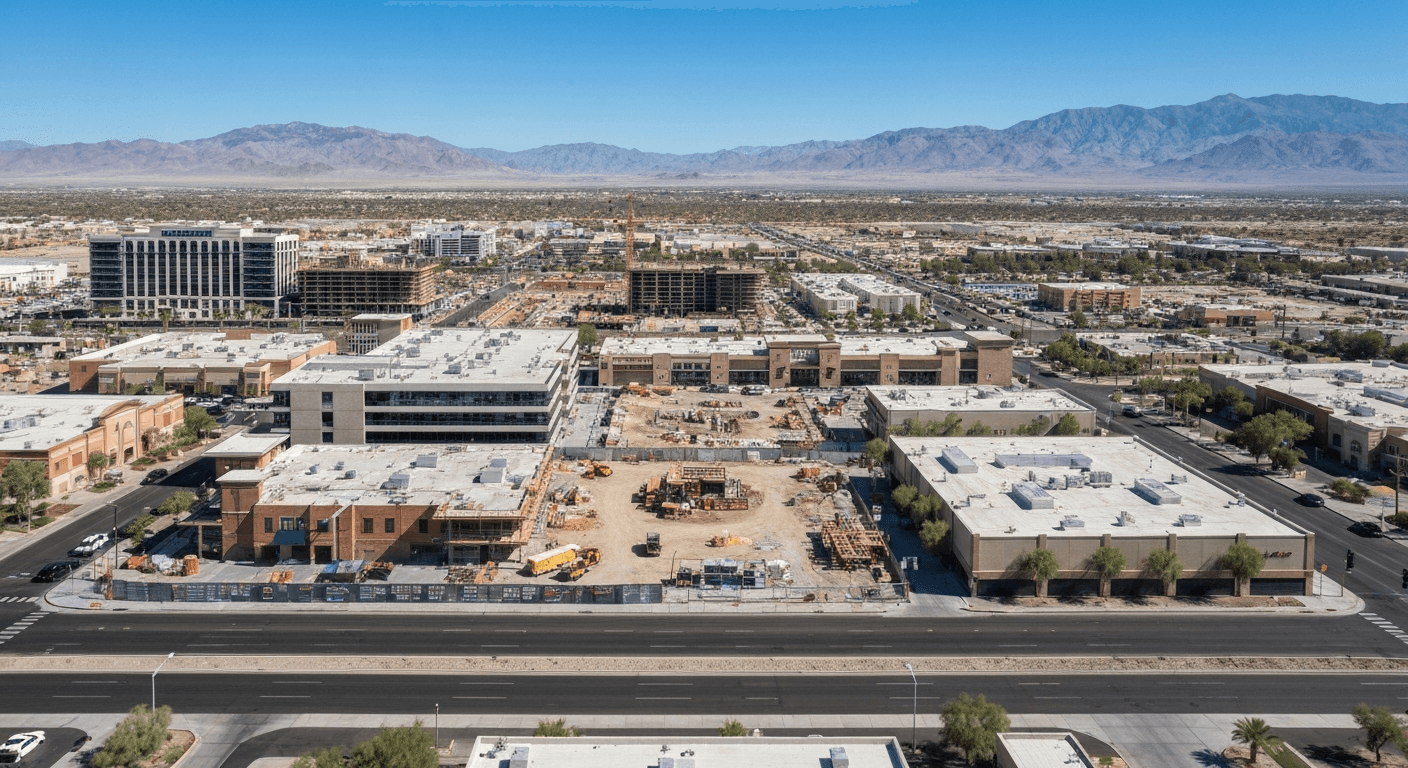
The Las Vegas valley carries low natural catastrophe exposure relative to the rest of the West: no hurricane risk, minimal wildfire on the valley floor, and far lower earthquake exposure than coastal California. That means Southern Nevada assets can capture the general market softening without paying the catastrophe surcharge that eats it elsewhere. The low-cat profile was always a quiet advantage. In a bifurcating market it becomes a pricing advantage you can underwrite.
Phoenix and the interior Southwest: watch the hail line
Phoenix and much of the interior Southwest carry severe convective storm exposure, meaning hail and wind. Ryan Specialty flagged severe convective storm as one of the perils where carriers are still holding tight terms even as the broad market softens. The reinsurance discount is real here too, but a hail-exposed roof with thin documentation will see less of it. Documentation and roof condition are now underwriting levers, not paperwork.
West Coast wildfire zones: the laggard
California is where the discount stalls hardest. Property Guardian reported that excess and surplus lines, the market of last resort, now cover roughly 20% of California commercial property, up from about 6% a decade ago, as standard carriers pulled back from wildfire-exposed segments. The California FAIR Plan alone has leaned on more than $1.15 billion in catastrophe bonds. Wildfire-zone accounts must show superior risk metrics to see any of the softening at all. For West Coast deals, the insurance line remains a real constraint on value, not a tailwind.
What we are doing about it
The practical takeaways for how we underwrite and operate right now:
- Stop underwriting insurance as a straight-line increase in low-cat markets. In Southern Nevada, a flat or modestly declining insurance assumption is now the realistic case, not the optimistic one.
- Shop every renewal and document the risk. The relief is going to well-modeled accounts with clean loss history and current risk controls. That is a controllable input, not luck.
- Treat catastrophe exposure as a durable value driver, not a footnote. The spread between a low-cat Las Vegas asset and a wildfire-zone West Coast asset is now wider than headline rates suggest, and it is showing up in insurability and financeability, not just premium.
- Look for mispriced deals underwritten at peak insurance. Sellers and appraisals still carrying trailing peak premiums are undervaluing NOI in markets where the line is about to fall. That gap is an entry point.
The hard market taught everyone to treat insurance as a permanent, one-way cost. That lesson is now expensive to hold onto in the wrong markets. The line is turning. The operators who capture it will be the ones who shop it, document it, and buy where the catastrophe map is on their side.
Sources
- Howden Re (via Reinsurance News), "2026 renewal sees sharpest decline in risk-adjusted global property rates since 2014" (David Flandro, Head of Industry Analysis, Howden Re).
- Business Insurance, "Property reinsurance renewals off 10% to 20%."
- Insurance Journal, "Cedents Find Competitive Market Conditions at Midyear Reinsurance Renewals: Brokers" (record reinsurance capital near $785 billion).
- Ryan Specialty, "May 2026 US Property Insurance Review" (primary layered program relief; severe convective storm and wildfire as laggard perils).
- Property Guardian, "The Reinsurance Market Is Softening: Wildfire-Exposed Commercial Property Should Not Expect the Discount to Trickle Down" (Aditya Dutt, Aeolus Capital Management; California E&S share; FAIR Plan catastrophe bonds).
- Multi-Housing News, "Why Insurance Costs Are No Longer High All Over."
- Loanbase, "The Valuation Gap: How Insurance Costs Actually Kill Deals in 2026" (DSCR and NOI mechanics).
- National Apartment Association (Premium Pulse) and CRE Daily reporting on multifamily insurance premium trends.
Frequently Asked Questions
- Did commercial property insurance actually get cheaper in 2026?
- At the reinsurance level, yes: property catastrophe rates fell about 14.7% at the January 1, 2026 renewal and 15% to 20% at June 1, per Howden Re and Business Insurance. At the individual property level the relief is uneven, running roughly 10% to 30% on well-modeled accounts and far less on catastrophe-exposed or poorly documented ones.
- Why isn't the reinsurance discount reaching my property?
- Capital does not flow evenly from reinsurance treaties down to individual buildings. Property Guardian, citing Aeolus Capital, reports primary carriers are holding the margin from cheaper reinsurance rather than cutting your rate, and catastrophe-exposed accounts still price for wildfire and hail uncertainty one account at a time.
- How much does insurance actually move a CRE deal?
- It sits inside net operating income, so it moves DSCR directly. Loanbase's 2026 analysis shows an $80,000 insurance swing on a mid-size asset can drop a deal from 1.25x to 1.12x DSCR, often the line between a bank loan and a costlier capital source, or between a deal and no deal.
- Which Southwest and West Coast markets benefit most from the softening?
- Low-catastrophe markets like the Las Vegas valley benefit most, capturing the general softening without a wildfire or hail surcharge. Phoenix and the interior Southwest still face severe convective storm (hail) scrutiny, and West Coast wildfire zones lag hardest, where excess and surplus lines now cover roughly 20% of California commercial property.
- How should I underwrite insurance on new acquisitions right now?
- In low-catastrophe markets, stop assuming straight-line increases; a flat to modestly declining insurance line is now the realistic case. Shop every renewal, document risk controls and loss history to qualify for relief, and look for deals still priced off peak insurance premiums, which can undervalue NOI where the line is about to fall.