Property insurance premiums are falling across much of the market in 2026, but that relief will not rebuild the deals insurance broke in 2023 and 2024. Two reasons: lenders now size loans off a normalized insurance cost rather than your actual premium, and the price relief is concentrated in coastal catastrophe markets that most Southwest and Mountain West operators never touch.
We are writing this because the headline is easy to misread. "Insurance rates are dropping" sounds like a green light. For an operator underwriting a multifamily or retail deal in Las Vegas, Phoenix, or Boise, it mostly is not, and the gap between the headline and the deal math is where money gets lost.
Insurance stopped being a line item and became a valuation input
The cleanest read on how far this went comes from CBRE. Its analysis found that rising insurance costs suppressed US multifamily property values by 3.6 percent nationally versus where they would otherwise sit, measured from the fourth quarter of 2019. Insurance is only the sixth largest expense for a typical apartment owner and about 8 percent of total operating expenses, yet it drove 17 percent of all expense growth over that stretch. A small line item did outsized damage.
The damage was not evenly spread. CBRE put the South Central region at a 7.8 percent value drag, led by Houston at 11.1 percent, and Florida at 6.8 percent, led by Jacksonville at 9.6 percent. Florida premiums more than doubled in two years. The pattern is the point: the value hit tracked catastrophe exposure, wind and flood and hail, not geography in general.
Here is why that matters even after premiums fall. Insurance hits value through net operating income (NOI). A dollar of added insurance expense is a dollar of lost NOI, and at a 6 percent cap rate a dollar of lost NOI is roughly 16.67 dollars of lost value. When the expense compounds year over year, the value it removes does not come back the moment next year's premium ticks down.
Why the 2026 softening does not give it back
The softening is real. Analysts at KBW expect risk-adjusted property catastrophe reinsurance pricing to fall 15 to 20 percent at the January 2026 renewals, on the back of a quieter than expected 2025 hurricane season and record reinsurance capital. Reporting from Risk and Insurance describes shared and layered property placements renewing 10 to 30 percent or more below expiring terms. Northmarq notes property coverage posting its first rate decline since 2017.
Three things keep that relief from rescuing the deals that broke.
1. Lenders underwrite a normalized number, not your premium
Most institutional credit teams will not use the sponsor's historical insurance expense. They calculate what adequate coverage should cost given today's replacement values and substitute that figure into the income statement. Loanbase, in its 2026 valuation-gap analysis, walks through the arithmetic: on a mid-size asset an 80,000 dollar upward insurance adjustment is not unusual, and a deal sitting at 1.25 times debt service coverage (DSCR, the ratio of NOI to debt payments that lenders use to size loans) drops to 1.12 times on that single change. Lower DSCR means smaller loan proceeds, which means a wider equity check or a lower price. Your soft-market bind quote does not travel with the loan file; the lender's normalized number does.
2. The relief is concentrated where the pain was
Reinsurance capital flows first to catastrophe-exposed coastal and wind accounts, because that is where carriers took the losses and where they now want to redeploy. A non-coastal Southwest asset that never had a hurricane problem was never priced on hurricane risk, so it captures less of the coastal relief. Nevada is the clean example: premiums there are still climbing 5 to 15 percent a year on reinsurance pass-through, roof-age underwriting, and rebuild-cost inflation, even as coastal Florida placements fall. The relief and the pain live in different zip codes.
3. The liability side has not moved
Property is softening. Casualty is not. Northmarq flags that excess liability premiums have not softened and remain difficult, which for habitational and multifamily owners is the line that keeps rising. If your renewal is going down, check whether it is the property tower or the whole program, because the general and excess liability layers are often still going the other way.
What this looks like in our markets
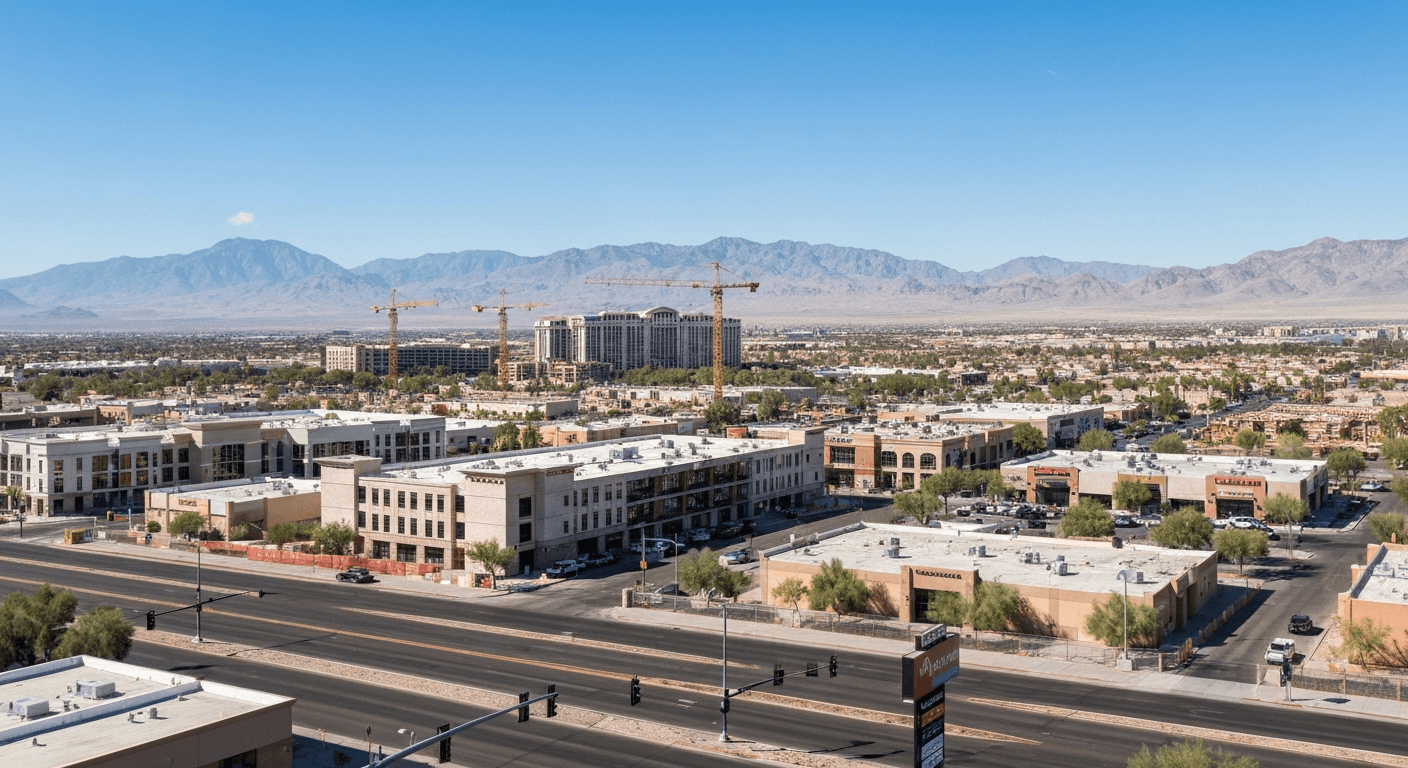
For VAC's footprint the mix is a relative advantage that the national headline hides.
- Nevada and inland Arizona. No hurricane, no coastal storm surge, limited wildfire relative to California. Premiums still rise on rebuild-cost inflation and roof age, but the absolute level and the volatility are lower than the Sun Belt catastrophe markets that drove CBRE's value drag. In an environment where insurance is a valuation input, operating in a low-catastrophe jurisdiction is an underwriting edge, not a footnote.
- California. The exception where relief is actually showing up in force. Some large insurers approved for roughly 7 percent increases in 2026 are instead cutting rates around 9 percent, and Southern California counties are seeing decreases of nearly 15 percent as capacity returns. If you own or are buying California multifamily, the 2026 renewal is worth shopping hard.
- Per-unit reality. Across the multifamily industry, operators are budgeting roughly 275 to 356 dollars more per unit than in prior years, per National Apartment Association data. On a 200-unit property that is 55,000 to 71,200 dollars of NOI, or roughly 917,000 to 1,187,000 dollars of value at a 6 percent cap. That is the number the softening has to claw back before a deal is whole.
How we underwrite it
Three habits keep the insurance line from surprising us at the closing table.
- Underwrite to the lender's normalized cost, not your bind quote. Ask your mortgage broker what a credit committee will plug in for this asset class and replacement cost, and model that. If it clears at that number, the soft-market quote is upside, not the base case.
- Get a real, replacement-cost-based quote early. Order it in diligence, not after the loan application. An 80,000 dollar surprise is a re-trade waiting to happen if you find it late.
- Price the non-catastrophe jurisdiction as an asset. When insurance is compressing values in Houston and Jacksonville, a Nevada or Boise deal with a stable, low-volatility property program is worth more than a spreadsheet that treats insurance as a flat percentage of revenue everywhere.
The one-line version: insurance is getting cheaper in the places that already blew up your comps, and the relief does not follow the loan into a lender's income statement. Underwrite the normalized number, and treat a boring insurance market as the feature it is.
Sources
- CBRE, "Insurance Costs Suppress Multifamily Values Most in Certain Sun Belt Markets"
- KBW, via Beinsure, "KBW sees 15-20% drop in property cat reinsurance rates at 2026 renewals"
- Risk and Insurance, "P&C Market Enters Correction Phase With Significant Rate Relief and Emerging Challenges"
- Northmarq, "From premiums to policies: Understanding commercial property insurance trends 2026"
- Loanbase, "The Valuation Gap: How Insurance Costs Actually Kill Deals in 2026"
- National Apartment Association, "Premium Pulse: National Multifamily Insurance Cost Acceleration"
- Nevada Real Estate Group, "Las Vegas Homeowners Insurance Costs Explained (2026)"
- Multi-Housing News, "Why Insurance Costs Are No Longer High All Over"
Frequently Asked Questions
- If insurance premiums are dropping in 2026, why won't my deal get easier to close?
- Because lenders underwrite a normalized insurance cost based on today's replacement values, not your actual bind quote. That normalized number stays elevated, keeps DSCR and loan proceeds down, and does not fall just because a soft-market quote came in cheaper.
- Why is Southwest insurance relief smaller than the national headlines suggest?
- Reinsurance capital flows first to coastal catastrophe accounts where carriers took losses. A non-coastal Nevada or inland Arizona asset was never priced on hurricane risk, so it captures little of that relief. Nevada premiums are still rising 5% to 15% a year.
- How much does an insurance change actually move a property's value?
- Insurance hits value through NOI. At a 6% cap rate, one dollar of added annual insurance expense removes about $16.67 of value. A $50,000 premium increase equals roughly $833,000 in lost value, which is why a small line item can reset a deal.
- Is the property or the liability side of my policy softening in 2026?
- Property coverage is softening and posted its first rate decline since 2017 per Northmarq. Excess and general liability have not softened and often keep rising, which matters most for habitational and multifamily owners. Check which tower is moving before assuming relief.
- How should I underwrite insurance on a new acquisition?
- Model the lender's normalized replacement-cost number, not your soft-market quote, and treat any cheaper bind as upside. Order a real replacement-cost-based quote in diligence, not after the loan application, so an $80,000 surprise does not force a late re-trade.